

Lip & Tongue-Tie Treatment in Loveland
Gentle, Safe Care for
Lip and Tongue Ties
Lip and tongue ties – also known as tethered oral tissues – can affect everything from feeding and speech to breathing and oral development. At Pediatric Dentistry of Loveland, we offer expert evaluation and treatment for lip and tongue-ties using advanced CO2 laser technology, designed to minimize discomfort and support long-term health.
Your child’s comfort and function guide every decision we make. We take a conservative approach to lip and tongue tie evaluations, addressing symptoms when they matter and avoiding unnecessary treatment. As parents, Dr. Katie and Dr. Matt offer the same balanced guidance they would want for their own kids.
Whether concerns come from your own feeding experience, a lactation consultant, or another provider, we’re here to evaluate your child’s tie and answer your questions. Call our office today to schedule an appointment with Dr. Katie and Dr. Matt.
Watch Our Video on Tongue Ties
What Is a Lip and Tongue Tie?

A lip or tongue tie occurs when tissue that connects the lips or tongue to the mouth is too tight or thick, restricting movement. This can lead to:
- Difficulty breastfeeding or bottle feeding
- Speech delays or articulation challenges
- Mouth breathing or sleep disturbances
- Gaps between teeth or gum recession
- Improper development of the top jawbone and teeth
- Challenges with oral hygiene and swallowing
- Food aversions and slow weight gain
- Reduced oral clearance and cavity development
How Do Lip & Tongue Ties Develop?
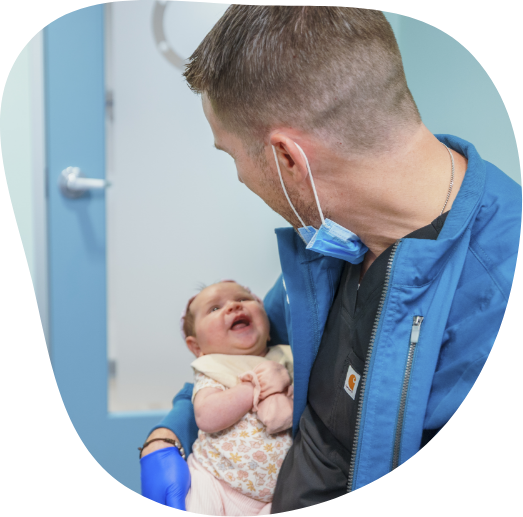
Lip and tongue ties form during early development in the womb. They involve small bands of tissue (called frenula) that connect the lips to the gums and the tongue to the floor of the mouth. When these tissues are unusually thick, tight, or short, they can limit movement and affect essential activities like swallowing, nursing, and speaking.
Laser Frenectomy Is Our Gentle Solution

We use the leading CO2 laser in the industry (LightScalpel) to release lip, tongue, and cheek ties with minimal discomfort, maximum precision, and safety. Compared to traditional methods, laser treatment offers the following benefits:
- No scalpels or sutures
- Little to no bleeding
- Faster healing and reduced inflammation
- Shorter procedure time and minimal post-op restrictions
Our team provides thorough aftercare guidance and collaborates with lactation consultants, speech therapists, and other specialists to support your child’s full recovery and development!
Why Families Trust Dr. Matt & Dr. Katie for Lip
& Tongue Tie Treatment

At Pediatric Dentistry of Loveland, our team provides gentle, thorough evaluations to determine whether a tie is present and whether treatment may benefit your child’s feeding, comfort, and overall oral development. We’re here to guide you with clarity, compassion, and evidence-based care!
Most Qualified
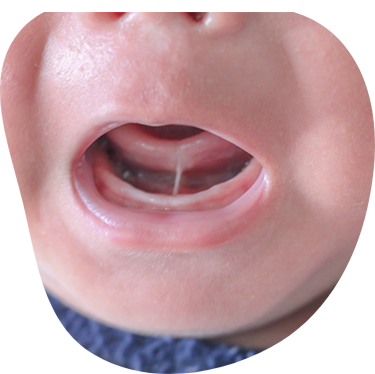
Lip and tongue tie treatment requires more than technical skill – it takes clinical insight, gentle communication, and a deep understanding of infant oral development. As Board-Certified pediatric dentists trained in leading children’s hospitals, Dr. Matt and Dr. Katie specialize in infant anatomy and soft tissue management, providing precise, thoughtful care for even the smallest patients.
Trustworthy

Their expertise goes beyond anatomy — it’s rooted in understanding how tethered oral tissues affect real-life function. Rather than recommending treatment based solely on appearance, Dr. Matt and Dr. Katie focus on symptoms: feeding challenges, speech delays, sleep disruptions, and other developmental concerns. This thoughtful, evidence-based approach means they only recommend treatment when it’s truly necessary. Families trust our team not just for clinical skill, but for our commitment to conservative care, honest guidance, and doing what’s best for each individual child.
Learn More About Our Step-By-Step Process
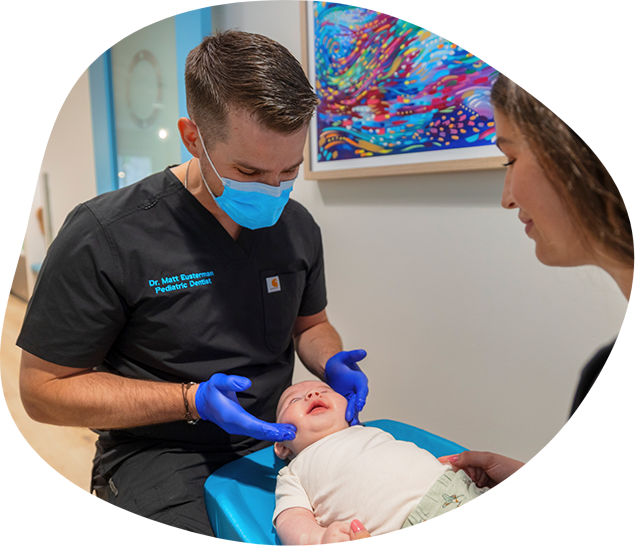
When it comes to your child’s health, Dr. Matt and Dr. Katie understand very well how even the littlest details can make a world of difference. That’s why we’re happy to provide step-by-step guides for this procedure for each age range. We want you to feel very well-informed and confident about what’s to come.
If you have additional questions, don’t hesitate to contact us directly. Our team would be happy to discuss the procedure with you.
Lip & Tongue Tie Release for Infants
This is how we approach the procedure for babies under 12 months, focusing first on comfort, gentleness, and successful feeding.
-
Initial Consultation & Symptom Review
- We start with a thorough discussion of any challenges you and your child are facing, such as feeding problems, latch issues, reflux, gassiness, and more.
- We will go through a detailed questionnaire to understand the full picture, including symptoms experienced by both baby and mother. This way, we can assess function, not just anatomy.
- A gentle exam is performed to evaluate tissue restriction and mobility.
-
Collaborative Evaluation
- We may recommend input from lactation consultants, bodyworkers, or feeding therapists to ensure a holistic view.
- If symptoms align with a tie diagnosis, we’ll discuss treatment options in further detail.
-
Parent Education & Consent
- We will explain the procedure, healing process, and aftercare clearly.
- You’ll receive written instructions and have time to ask questions before moving forward.
-
Laser Release Procedure
- This is performed in office using the LightScalpel CO2 laser.
- The procedure only takes a few minutes, with minimal bleeding and no sutures.
- Topical anesthesia (designed specifically for infants) is used to support your baby’s comfort during the procedure.
- Your baby will be swaddled for safety and reassurance.
-
Immediate Post-Op Support
- You’ll be encouraged to feed your baby right after the procedure to soothe and assess latch improvement.
- We will monitor your baby’s comfort and provide guidance for the first 24 hours.
-
Aftercare & Follow-Up
- Gentle stretches may be recommended to support healing and prevent reattachment (see below).
- We’ll always follow up within 1-2 weeks to assess healing and progress.
- Ongoing collaboration with feeding specialists is encouraged as needed.
Lip & Tongue Tie Release for Children
This is how we approach the procedure for toddlers and young children who may have speech, sleep, or feeding concerns.
-
Comprehensive Evaluation
- We’ll start by reviewing symptoms such as speech delays, picky eating, mouth breathing, and/or sleep disturbances.
- A functional exam is performed to evaluate overall mobility and restriction.
-
Parent Discussion & Conservative Planning
- Our team will always focus on symptoms, not just anatomy. Treatment is only recommended when function is clearly impacted.
- Multiple options are presented, and parents are empowered to choose what feels right!
-
Preparation & Comfort Planning
- We’ll discuss sedation options (if needed), sensory accommodations, and how to prepare your child emotionally for the procedure.
- Visual aids and child-friendly language are always available to help reduce anxiety.
-
Laser Release Procedure
- This is performed in office using the LightScalpel CO2 laser in a calm, supportive setting.
- The procedure is quick and precise, with minimal discomfort and no sutures.
-
Post-Op Care & Healing Guidance
- Parents will receive detailed instructions for healing, pain management, and gentle stretches (see below).
- We provide tips for helping your child eat, speak, and sleep comfortably during recovery.
-
Follow-Up & Functional Support
- A follow-up visit will be scheduled to assess your child’s healing and overall progress.
- Collaboration with speech therapists, myofunctional therapists, or occupational therapists may be recommended.
Lip & Tongue Tie Release for Teens
This approach is specifically designed for adolescents who have speech, orthodontic, or airway concerns.
-
Detailed Symptom Review & History
- We’ll get started by discussing long-term symptoms that your child has faced, such as speech challenges, jaw tension, sleep apnea, or orthodontic relapse.
- A thorough oral exam and mobility assessment will be performed.
-
Collaborative Planning & Education
- Both teens and parents will be involved in the decision-making process.
- Our team will explain how tethered tissues may affect airway, posture, or oral function – and when release may help.
-
Procedure Preparation
- Sedation options are discussed if needed, though many teens tolerate the procedure well with topical anesthetic.
- We will always provide clear expectations and answer all questions!
-
Laser Release Procedure
- This is performed in office using the LightScalpel CO2 laser in a calm, private setting.
- The procedure is quick, precise, and minimally invasive, with reduced bleeding and fast healing.
-
Post-Op Recovery & Support
- Teens will receive tailored aftercare instructions, including stretches and recommended exercises (see below).
- We will provide guidance on speech, breathing, and oral function during the healing process.
-
Follow-Up & Functional Integration
- A follow-up visit will always be scheduled so that we can assess your teen’s healing and progress.
- Collaboration with orthodontists, myofunctional therapists, or airway specialists may be part of the long-term treatment plan.
Learn More About Oral Exercises
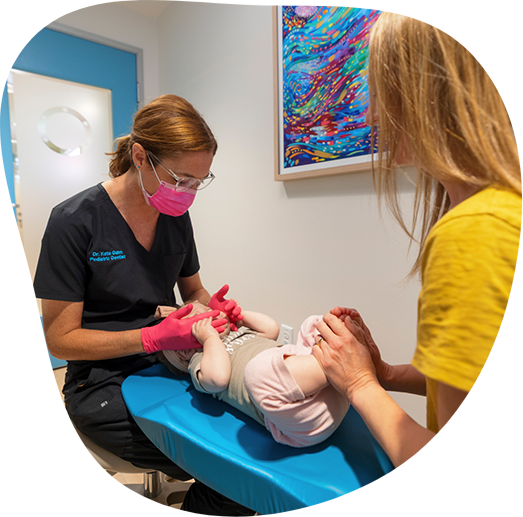
Following lip and tongue tie treatment, there are oral exercises your child should complete (with their parent’s help) to support ongoing healing, function, and mobility. Please select your child’s age range below to learn more, and don’t hesitate to reach out to us for more guidance if needed.
Infant Oral Exercises (0-12 Months)
These exercises are typically recommended for 3-4 weeks post-procedure, depending on healing and symptoms. They should be done 3-5 times per day. Here are the steps:
-
Prepare Your Space
- Wash your hands thoroughly.
- Choose a calm and well-lit area. Swaddling your baby can provide extra comfort and stability.
-
Lift & Stretch the Lip (if lip tie was released)
- Gently lift the upper lip towards the nose until you feel resistance.
- Hold for 1-2 seconds and then release.
- Repeat this action 3-5 times.
-
Tongue Elevation Stretch
- Please your fingers under the tongue and gently lift towards the palate.
- Hold for 1-2 seconds and then release.
- Repeat this action 3-5 times.
-
Tongue Healing Site Push
- Push the tongue backwards at the surgical site (often looks like a white diamond shape) until you feel the tissue stretch.
- If bleeding occurs at the site, it’s okay! This can be part of the correct healing process.
- Hold for 1-2 seconds and then release.
- Repeat this action 3-5 times.
-
Side-to-Side Tongue Massage
- Use your finger to gently sweep the tongue side to side.
- This encourages lateral movement and coordination.
-
Soothe & Reconnect
- Offer comfort to your child through feeding, skin-to-skin contact, and/or gentle rocking.
- Use this time to observe latch improvements and bonding.
Here’s an extra tip: Singing or talking softly to your baby during these exercises is a great way to reduce stress and build trust.
Child Oral Exercises (1-8 Years)
These exercises are typically done 3-5 times per day for 3-4 weeks. Use playful language and visuals to help your child engage! Here are the steps:
-
Create a Routine
- Choose consistent times for the stretches (after meals, before bed, etc)
- Use a mirror or a visual chart to help your child follow along
-
Lip Lift Stretch (if lip tie was released)
- Have your child open wide and lift their upper lip towards their nose.
- Hold for 3 seconds and then relax.
- Repeat this action 5 times.
-
Tongue Elevation Stretch
- Ask your child to touch the roof of their mouth with their tongue.
- Use a clean finger or tongue depressor to gently assist if needed.
- Hold for 3 seconds and then repeat 5 times.
-
Tongue Side-to-Side Movement
- Encourage your child to move their tongue left to right, just like a windshield wiper.
- Make it a game – let’s see how many “swipes” they can do!
-
Tongue Pops & Clicks
- Ask your child to make clicking sounds with their tongue.
- This action builds strength and coordination in a fun way.
-
Reward & Reassure
- Use stickers, praise, and/or a small chart to celebrate consistency.
- Reassure them that these exercises will help their tongue get stronger and smarter over time.
Teen Oral Exercises (9+ Years)
Teens may need these exercises 2-3 times per day for 2-3 weeks, depending on their healing and symptoms. Encourage independence while also offering support! Here are the steps:
-
Set Expectations
- Explain the purpose of these exercises: improved speech, breathing, and comfort.
- Let them choose when and where to do the exercises.
-
Lip Stretch (if applicable)
- Open wide and lift the upper lip towards the nose.
- Hold it for 5 seconds and then relax.
- Repeat this action 5 times.
-
Tongue Elevation Stretch
- Press the tongue firmly to the roof of the mouth.
- Hold for 5 seconds and then repeat 5 times.
- Use a mirror to check for full elevation.
-
Tongue Circles & Swipes
- Move the tongue in slow circles inside the mouth.
- Swipe left to right across the palate.
- Repeat this 10 times.
-
Tongue Push-Ups
- Press the tongue against a spoon or tongue depressor that’s held at the roof of the mouth.
- Hold for 5 seconds and then repeat 5 times.
-
Track Progress & Reflect
- Keep note of changes to their speech, sleep, or comfort. Journaling or voice notes can help!
- Celebrate milestones and improvements together.
Here’s an extra tip: Teens respond well to purpose-driven care. Connect exercises to their overall goals (this could include clearer speech, better sleep, improved confidence, etc).